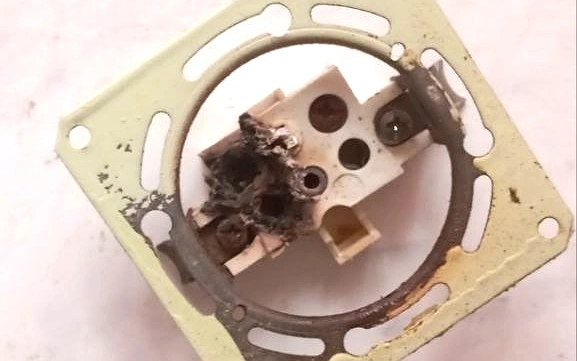
⚠️ This is a dangerous situation!
If you smell burning or melting plastic from a socket, or see smoke — this is a fire hazard warning. Never ignore this sign. A self-damaging socket is one of the most common causes of electrical accidents in homes.
What to do right now — step by step
- Switch off the corresponding circuit breaker in your electrical panel. Don't try to unplug devices from the socket — the current may still be live.
- Do not touch the socket! A hot or melted socket can cause an electric shock.
- Check other sockets on the same wall section — they may also be affected.
- Call an electrician before the situation gets worse.
 Viber
Viber
Why does a socket smell?
Loose terminals: Over time, terminal connections loosen and the contact point starts generating heat. The heat melts the socket casing — that's where the distinctive smell comes from.
Overload: Plugging too many high-wattage devices into a single socket causes the wires to overheat.
Old wiring: Aluminium wires and old Soviet-era sockets are especially dangerous. Their terminals loosen easily and corrode over time.
Moisture: Bathrooms and kitchens — moisture in the socket causes oxidation and heat buildup.
What will the electrician do?
- Inspect the socket and terminals with a thermal camera
- Tighten loose terminals or replace the socket with a new one
- Check the condition of the wiring — burnt wires need to be replaced
- Recommend RCD installation if needed
Prevention
Have an electrician carry out a regular inspection at least once every two years. A visual check starts from just €50 (call-out, diagnostics + first hour) and ensures your home's electrical system is safe.