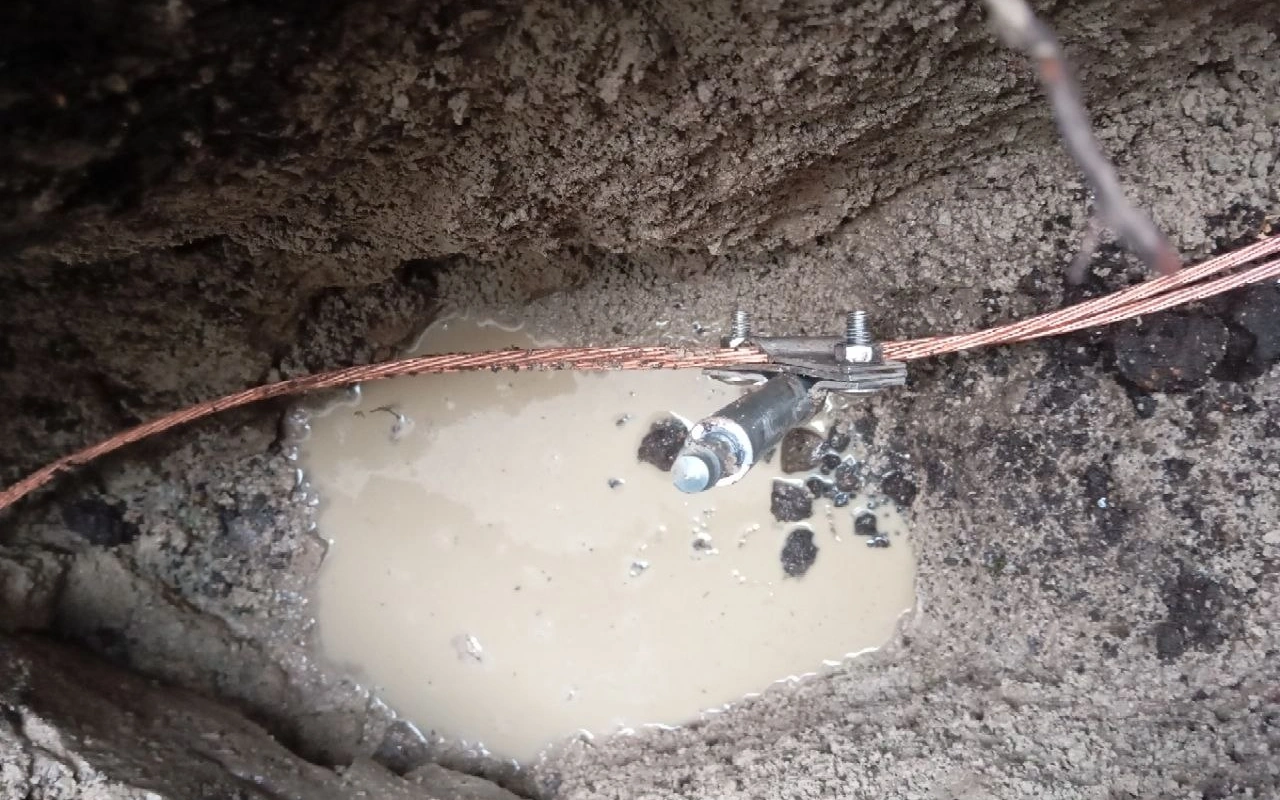
What is grounding and why does it matter?
Grounding is the cornerstone of electrical safety in your private house. It creates a connection between the metal casings of electrical appliances and the ground, so that in case of a fault, current is safely directed through the ground — not through the human body. Without proper grounding, every electrical appliance in your private house is a potential hazard.
Grounding is especially important in private houses because older homes (built before 2000) often lack protective grounding — wall sockets have no earth contact at all.
How to check grounding in your private house
- Check your sockets: Grounded sockets must have a third (earth) contact. If your private house only has two-pin sockets — there is no grounding.
- Look at your electrical panel: The grounding arrangement shows whether the panel is properly earthed. The presence of an RCD (residual current device) is also important as additional protection.
- Use a socket tester: A socket tester shows immediately whether the ground connection is working. A handy tool you can pick up for around €10–15.
- Call an electrician: A professional measurement gives you an exact result — ground resistance must be below 10 ohms.
 Viber
Viber
Warning signs of poor grounding
- Metal casings of appliances feel slightly electrified (tingling sensation)
- Sockets are missing the third (earth) contact
- RCD trips frequently without an obvious reason
- You feel an electric shock in the bathroom or kitchen when touching water
- Lights flicker or bulbs burn out unusually often
Types of grounding in a private house
TN-C-S system: The most common system in Estonian private houses. Combined neutral and ground conductor split at the main cable. Requires a proper ground loop.
TT system: A separate ground loop installed near the house. Suitable for private houses where the main cable doesn't provide adequate grounding.
IT system: Isolated neutral — rare in private houses, used in special circumstances.
What to do if grounding is missing or faulty
Fixing grounding in a private house is not a DIY job. Call an electrician who will:
- Inspect and measure the condition of existing grounding
- Install or upgrade the ground loop to meet standards
- Replace two-pin sockets with grounded three-pin ones
- Install an RCD for life safety protection
- Provide a warranty for the work completed